Microsoft strengthens Azure AI infrastructure with AMD processors
Microsoft and AMD are expanding their partnership to integrate AMD's latest GPUs and CPUs into Microsoft Azure, aiming to enhance AI infrastructure.
What happened?
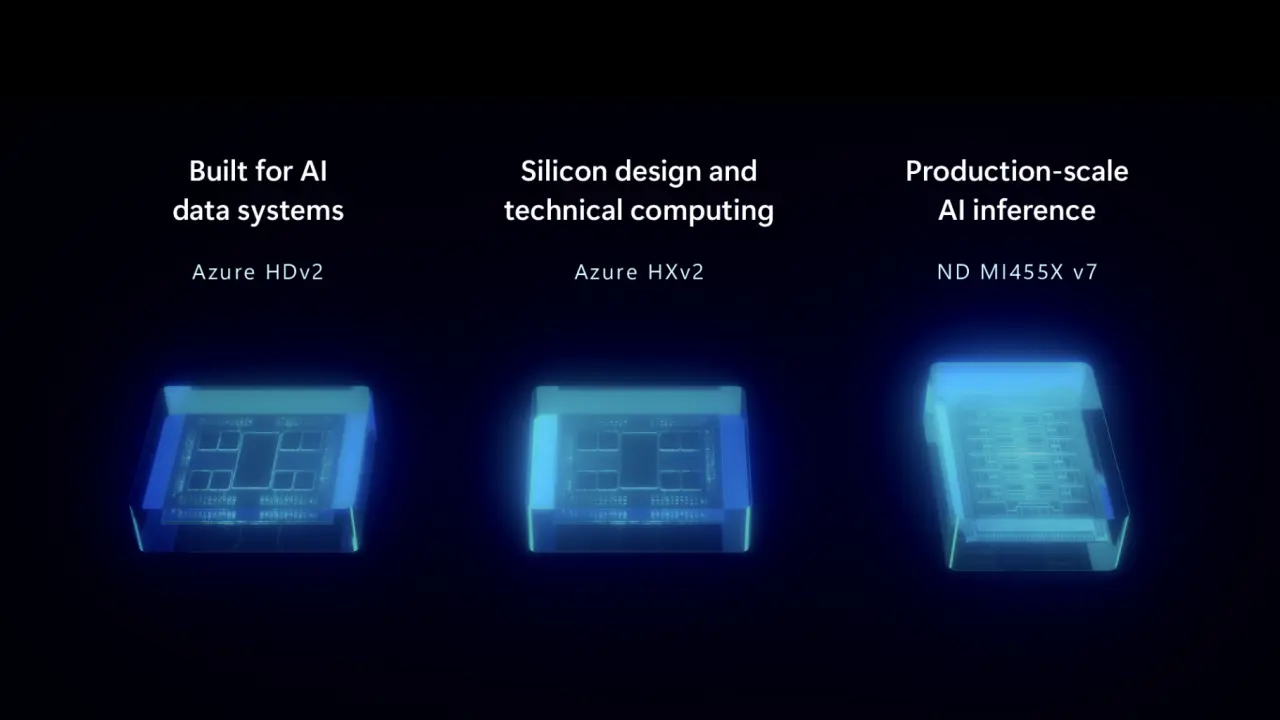
Microsoft has announced an expanded partnership with AMD to implement AMD Instinct GPUs, EPYC CPUs, Pensando networking, and ROCm software within Microsoft Azure. Central to this collaboration is AMD's Helios platform, which will be utilised in Azure ND MI455X v7 virtual machines. The Helios systems, featuring AMD Instinct MI455X GPUs and sixth-generation EPYC 'Venice' CPUs, are expected to be delivered in the second half of 2026.
Key facts
| Leverans av Helios-system | Andra halvan av 2026 |
|---|---|
| GPU-modell i Helios | AMD Instinct MI455X |
| CPU-modell i Helios | Sjätte generationens EPYC "Venice" |
| Nya Azure VM-familjer | HDv2, NPv2 |
”Microsoft and AMD today announced an expanded partnership involving AMD Instinct GPUs, EPYC CPUs, Pensando networking, and ROCm software on Microsoft Azure.”
”At the center of the partnership is AMD’s Helios rack-scale platform, which Microsoft will deploy through its upcoming Azure ND MI455X v7 virtual machines.”
”AMD will be shipping Helios systems during the second half of 2026.”
Why it matters
This expansion of Azure AI infrastructure allows Microsoft to handle large-scale AI inference, including advanced models and agentic applications. The integration of AMD's hardware and software aims to deliver increased capacity and performance for both Azure AI services and customer-specific workloads.
Who is affected?
This partnership impacts Microsoft customers using Azure AI services and developers building applications on the Azure platform. AMD's hardware will power new virtual machines, providing users with access to more powerful AI computing resources.
Impact on the EU
The services will be available globally, including within the EU, giving European companies and developers access to the new, enhanced AI infrastructure.
What else you should know
Microsoft also introduced two new families of Azure VMs, HDv2 and NPv2, optimised for CPU-intensive AI workloads and large-scale AI training and inference, respectively.
Quick answers about this story
Vad har hänt?
När hände det?
Varför spelar det roll?
Vilka bolag berörs?
The link opens in a new window and leads to the publisher's own site.
Källan har spårats automatiskt från utgivaren via Aheadlines signalkedja.
AI-verktyg i artikeln
Topics
Get similar news straight to your inbox
The reader's room
Send in a question or an addition. The newsroom reads everything before it's published and replies when relevant. No AI-generated text – just people.
Sign in to submit a comment or question.
Read the article through your role
- Assess technical risk: model choice, vendor lock-in, data flow and running cost.
- Update the architecture doc if new APIs or regulations touch production.
- Ensure observability + rollback plan before rolling out to production.
Generated angle — not editorial analysis of "Microsoft strengthens Azure AI infrastructure with AMD proce"