Background: How Meta laid the foundation for the open flagship Llama 3
When Meta announced Llama 3, it was confirmed that the model would remain open for commercial use. The announcement laid the foundation for one of the most widely used open AI families of 2024.
What happened?
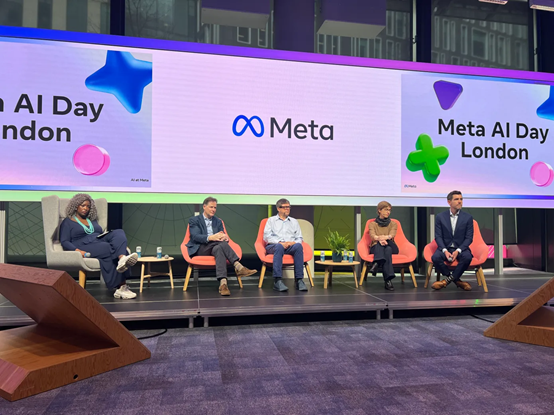
During the spring of 2024, Meta confirmed that the next generation of its open language model, Llama 3, would be released in several variants while maintaining an open-source license. The statement was made by Nick Clegg, President of Global Affairs, and Joelle Pineau, VP of AI Research at Meta, ahead of the full-scale launch that subsequently took place in 2024.
Key facts
| Föregångarens träningsdata (Llama 2) | 2 biljoner tokens |
|---|---|
| Arkitektur | Transformer-baserad grundmodell |
| Licensform | Öppen för forskning och kommersiellt bruk |
”Vi hoppas kunna lansera nästa generations grundmodell Llama 3 inom den närmaste månaden, eller ännu snabbare.”
Why it matters
The announcement marked Meta's strategic decision to continue challenging closed ecosystems by offering high-performance models for free commercial use. This laid the foundation for the widespread adoption Llama 3 later achieved among enterprises and self-hosted AI solutions.
Who is affected?
The decision to keep Llama 3 open impacted AI developers, research institutes, and startups globally that seek alternatives to closed models from OpenAI and Google. European and Swedish developers were thus provided with continued access to foundation models for local deployment.
Impact on the EU
The open licensing of the Llama series has generally made the models available to developers within the EU, although Meta's later multimodal features have encountered regulatory scrutiny under the EU's GDPR and AI Act.
What else you should know
The information originates from Meta's event in London in the spring of 2024, where the company's AI leadership outlined the path for the successor to Llama 2. The model was later launched in several sizes, including 8B, 70B, and subsequently 405B parameters.
Quick answers about this story
Vad har hänt?
När hände det?
Varför spelar det roll?
Påverkar det EU?
The link opens in a new window and leads to the publisher's own site.
Källan har spårats automatiskt från utgivaren via Aheadlines signalkedja.
AI-verktyg i artikeln
Topics
Get similar news straight to your inbox
The reader's room
Send in a question or an addition. The newsroom reads everything before it's published and replies when relevant. No AI-generated text – just people.
Sign in to submit a comment or question.
Read the article through your role
- Decide whether this affects strategy over 6–12 months or is just noise.
- Discuss with leadership: do we own the right question or does ownership need to move?
- Ask: what risk are we taking by NOT acting on this this quarter?
Generated angle — not editorial analysis of "Background: How Meta laid the foundation for the open flagsh"