European Parliament launches proprietary AI platform for legislators
The European Parliament is introducing the EPGenAI Hub, an internal AI platform designed to provide MEPs and staff with secure access to AI models from multiple providers for legislative duties.
What happened?
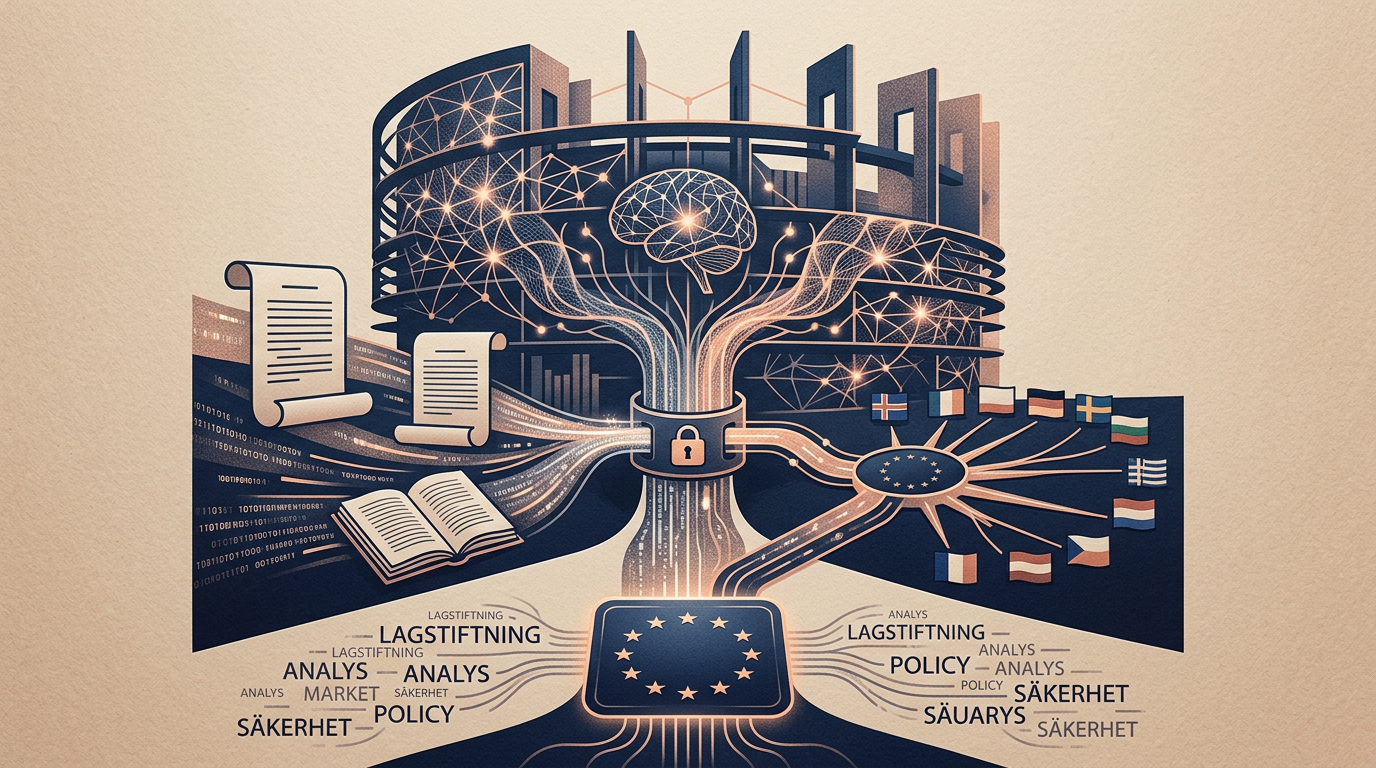
The European Parliament has launched EPGenAI Hub, an internal platform providing parliamentarians and staff with access to AI models. The objective is to offer a more secure alternative to the public AI tools already being utilised in legislative activities. The platform integrates models from Meta, OpenAI, Anthropic, and the French company Mistral.
Key facts
| Plattformens namn | EPGenAI Hub |
|---|---|
| AI-modeller som ingår | Meta, OpenAI, Anthropic, Mistral |
| Syfte | Säkert alternativ till publika AI-verktyg |
| Fokus | Säkerhet, datahantering och teknologisk suveränitet |
”The internal platform, known as EPGenAI Hub, will give lawmakers and staff access to models from Meta, OpenAI, Anthropic and France’s Mistral, offering what Parliament hopes will be a safer alternative to the public AI tools already being used for legislative work.”
Why it matters
The initiative aims to address the challenges and concerns posed by AI by offering a controlled environment for its application. This allows the European Parliament to maintain oversight of security and data management, which is critical for sensitive legislative work. By providing its own tools, the institution reduces its reliance on external, unregulated AI services.
Who is affected?
European Parliament members (MEPs) and staff are the primary users of the EPGenAI Hub. The decision also affects AI developers such as Meta, OpenAI, Anthropic, and Mistral, whose models are integrated into the platform. EU citizens are indirectly affected through increased efficiency and security in the legislative process.
Impact on the EU
EPGenAI Hub is available to European Parliament employees and members. The launch of this platform is a direct response to concerns surrounding AI within the EU and its emerging regulations, such as the AI Act. The initiative reflects a drive for "technological sovereignty" within the EU regarding AI implementation.
What else you should know
The European Parliament has previously replaced Google with the European search engine Qwant, indicating a broader strategy to reduce dependence on non-European tech giants and strengthen Europe's own digital infrastructure.
Quick answers about this story
Vad har hänt?
När hände det?
Varför spelar det roll?
Vilka AI-modeller inkluderas?
Påverkar det EU-medborgare direkt?
The link opens in a new window and leads to the publisher's own site.
Källan är en aggregator eller syndikering — vi rekommenderar att verifiera hos primärutgivaren.
AI-verktyg i artikeln
Topics
Get similar news straight to your inbox
The reader's room
Send in a question or an addition. The newsroom reads everything before it's published and replies when relevant. No AI-generated text – just people.
Sign in to submit a comment or question.
Read the article through your role
- Decide whether this affects strategy over 6–12 months or is just noise.
- Discuss with leadership: do we own the right question or does ownership need to move?
- Ask: what risk are we taking by NOT acting on this this quarter?
Generated angle — not editorial analysis of "European Parliament launches proprietary AI platform for leg"