Global AI Regulation Tightens: How the EU AI Act Works
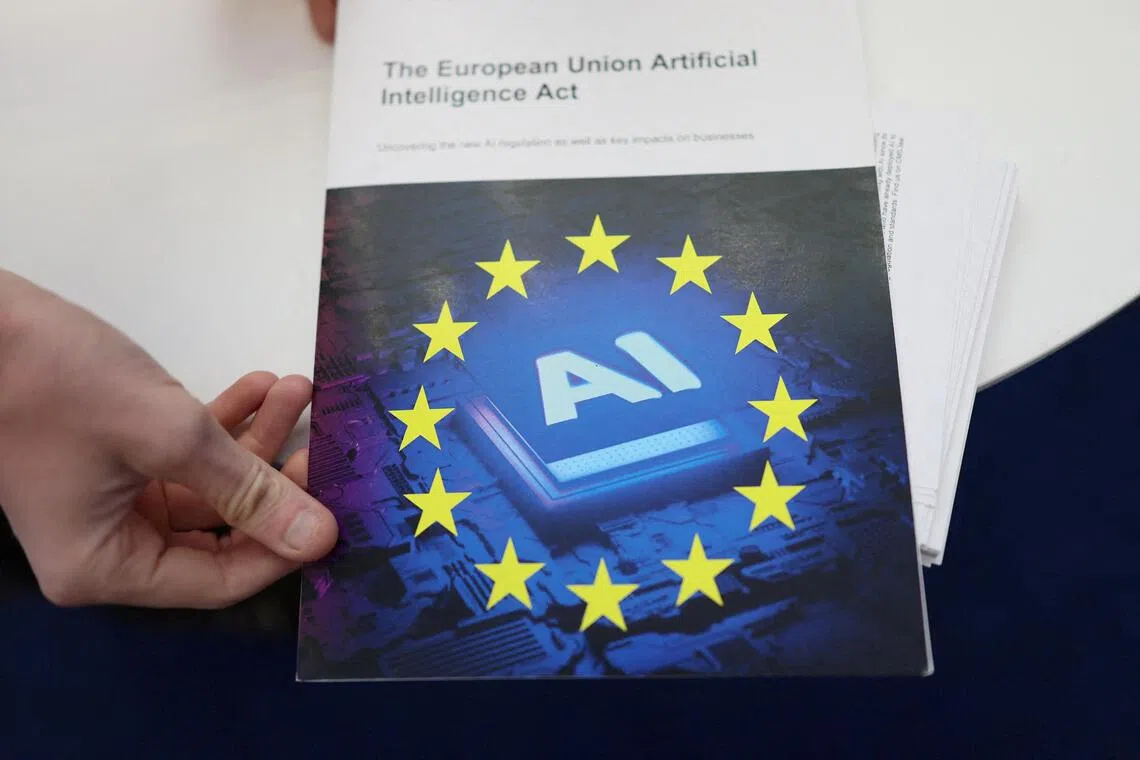
The EU AI Act sets a new global standard for AI regulation. The legislation implements a risk-based model that imposes strict requirements on developers and users throughout the union.
What happened?
The EU AI Act, the world's first comprehensive legislation for artificial intelligence, entered into force in 2024 to regulate the development, deployment, and usage of AI systems within the EU. The law applies a risk-based model in which AI applications are divided into different risk categories with corresponding requirements for transparency and safety. Oversight of the regulatory framework is managed at the EU level by the European Commission, in conjunction with national authorities.
Key facts
| Lagstiftning | EU AI Act |
|---|---|
| Ikraftträdande | 2024 |
| Regleringsmodell | Riskbaserad ansats |
Why it matters
Strict legal requirements in the EU are compelling global AI developers to adapt their products to European safety and privacy standards. This creates a clear playing field for companies within the union, but also results in some advanced AI features being delayed in Europe compared to regions with more permissive frameworks.
Who is affected?
The regulations affect all companies and developers that build, provide, or use AI systems within the EU market. International companies targeting their AI services at users within the EU must also comply with the framework.
Impact on the EU
The EU AI Act is fully applicable in all EU member states, including Sweden. Because the law applies a risk-based model, it entails stricter requirements and prohibitions for actors operating within the union compared to regions such as the United States and Singapore.
What else you should know
Individual countries and regions have chosen different paths for AI regulation. While the EU has enacted comprehensive legislation, Singapore relies on voluntary frameworks, China combines strict content control with industry incentives, and the United States has a more fragmented approach featuring state-level proposals such as 'kill switch' mandates.
Quick answers about this story
Vad har hänt?
När hände det?
Varför spelar det roll?
Påverkar det EU?
The link opens in a new window and leads to the publisher's own site.
Källan har spårats automatiskt från utgivaren via Aheadlines signalkedja.
AI-verktyg i artikeln
Topics
Get similar news straight to your inbox
The reader's room
Send in a question or an addition. The newsroom reads everything before it's published and replies when relevant. No AI-generated text – just people.
Sign in to submit a comment or question.
Read the article through your role
- Decide whether this affects strategy over 6–12 months or is just noise.
- Discuss with leadership: do we own the right question or does ownership need to move?
- Ask: what risk are we taking by NOT acting on this this quarter?
Generated angle — not editorial analysis of "Global AI Regulation Tightens: How the EU AI Act Works"