Databricks Mosaic AI introduces contextual security policies
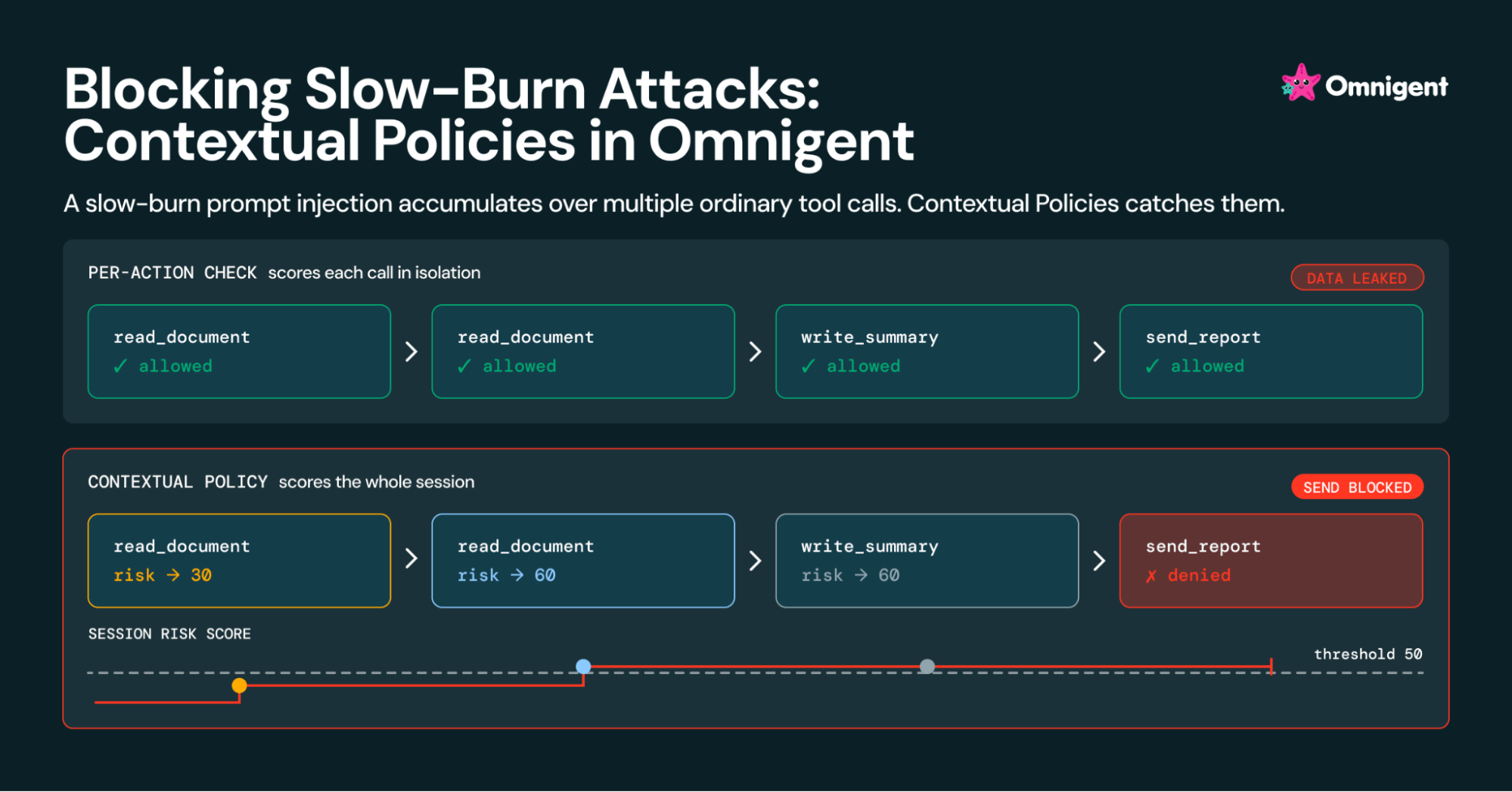
Databricks has launched new contextual security policies for its platform. These policies aim to identify and block prolonged cyberattacks, known as "slow-burn" attacks, by analysing agent behaviour over time rather than individual actions.
What happened?
Databricks' new functionality focuses on introducing contextual security policies. These policies are designed to detect and prevent advanced, slow-moving cyber threats termed "slow-burn" attacks. The method involves evaluating an agent's actions within a broader context and over longer durations, rather than merely scrutinising isolated events.
Key facts
| Plattform | Databricks Omnigent |
|---|---|
| Typ av attacker | Slow-burn-attacker |
| Metod | Kontextuella säkerhetspolicyer |
| Fokus | Analyserar agentbeteende över tid |
”Judging an agent one action at a time isn't enough. In this post, we show how a realistic…”
Why it matters
Traditional security systems often struggle to detect attacks carried out in small increments over long periods. By implementing contextual policies, Databricks can build a more complete picture of a user's or system's behavioural patterns. This enables the identification of anomalous or malicious sequences that would otherwise remain undetected, strengthening protection against sophisticated threats.
Who is affected?
This primarily affects enterprises and organisations using the Databricks platform, particularly those handling sensitive data. Security officers, IT departments, and developers working with data platforms gain new tools to protect against advanced threats. Users whose data is better protected benefit indirectly.
What else you should know
The focus is on the identification of "slow-burn" attacks where agents perform minor, non-malicious actions over time to evade detection, eventually culminating in a major breach. These policies allow security teams to define complex rules based on behavioural patterns.
Quick answers about this story
Vad har hänt?
När hände det?
Varför spelar det roll?
Vilka typer av hot adresseras?
The link opens in a new window and leads to the publisher's own site.
Källan har spårats automatiskt från utgivaren via Aheadlines signalkedja.
AI-verktyg i artikeln
Topics
Get similar news straight to your inbox
The reader's room
Send in a question or an addition. The newsroom reads everything before it's published and replies when relevant. No AI-generated text – just people.
Sign in to submit a comment or question.
Read the article through your role
- Decide whether this affects strategy over 6–12 months or is just noise.
- Discuss with leadership: do we own the right question or does ownership need to move?
- Ask: what risk are we taking by NOT acting on this this quarter?
Generated angle — not editorial analysis of "Databricks Mosaic AI introduces contextual security policies"