Anthropic plans to design its own hardware to power Claude
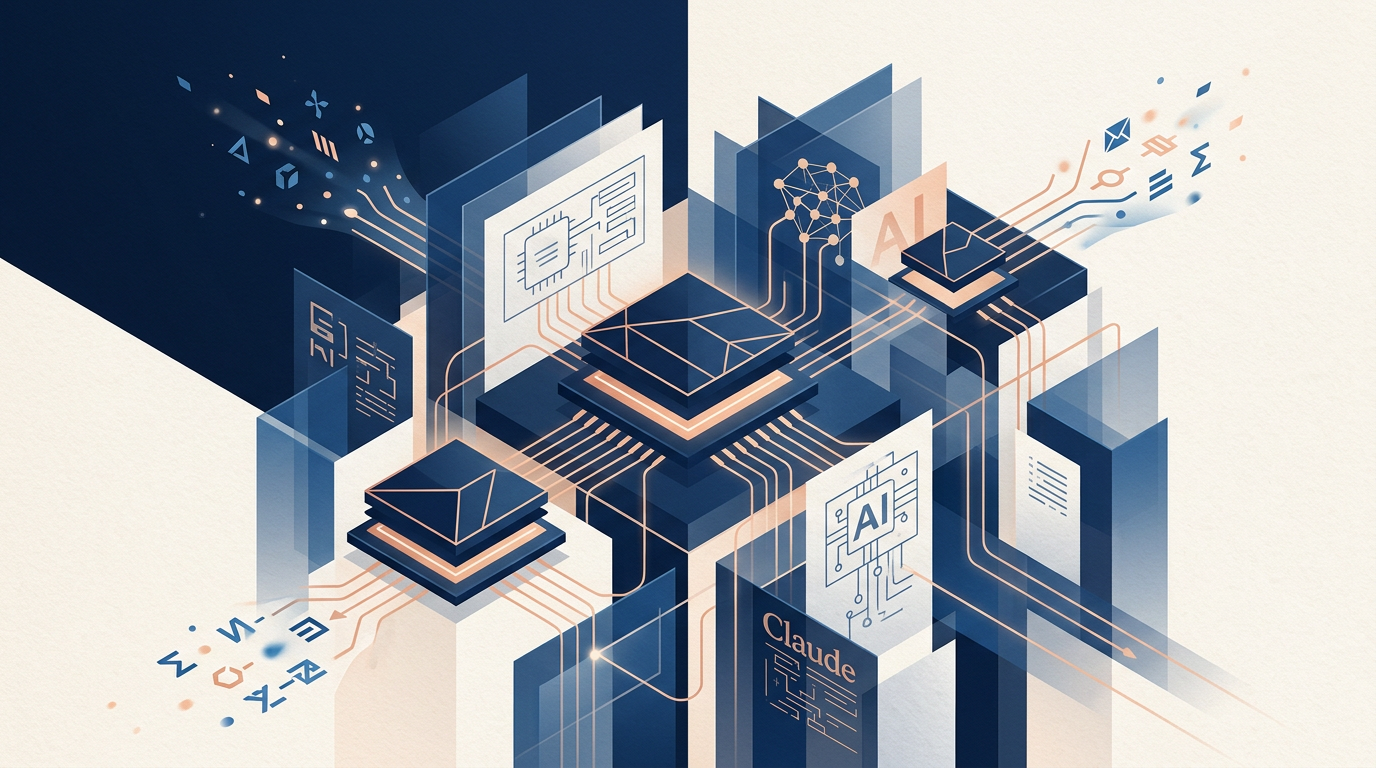
AI company Anthropic plans to develop its own hardware to power its Claude AI model, in a move to reduce computing costs and reliance on external chip manufacturers.
What happened?
AI company Anthropic is planning to start designing its own hardware and custom-made chips to power its Claude models. The decision marks a shift away from relying solely on external chip manufacturers like Nvidia and the standard infrastructure provided by cloud operators. The goal is to optimise performance, reduce energy consumption, and secure hardware capacity for future AI models.
Key facts
| AI-modell | Claude |
|---|---|
| Initiativ | Egendesignad maskinvara för AI-drift |
Why it matters
The costs and energy consumption associated with training and running large language models have become one of the AI industry's biggest bottlenecks. By developing its own silicon architecture, Anthropic is following in the footsteps of tech giants such as Google, Amazon, and Microsoft. This gives the company greater control over its data centres and reduces its reliance on Nvidia's dominant but costly graphics processing units.
Who is affected?
The venture primarily impacts Anthropic's own AI researchers and infrastructure engineers, who will gain access to tailored computing power. In the long term, it could also affect companies and developers building services on Claude through increased capacity and potentially lower pricing. The development also concerns the semiconductor industry and established players like Nvidia.
Impact on the EU
While the push for proprietary hardware is taking place in the US, changes to infrastructure may affect how data centres are built and operated globally, including within the EU, where requirements for data sovereignty and energy efficiency are strictly regulated.
What else you should know
By designing custom-made chips, Anthropic hopes to lower the soaring costs of training and inference. The strategy reflects the evolution already seen among the major cloud giants but marks a new chapter in which dedicated AI laboratories are taking direct control of their silicon calculations.
Quick answers about this story
Vad har hänt?
När hände det?
Varför spelar det roll?
Vilka branscher påverkas mest?
The link opens in a new window and leads to the publisher's own site.
Källan är en aggregator eller syndikering — vi rekommenderar att verifiera hos primärutgivaren.
AI-verktyg i artikeln
Topics
Get similar news straight to your inbox
The reader's room
Send in a question or an addition. The newsroom reads everything before it's published and replies when relevant. No AI-generated text – just people.
Sign in to submit a comment or question.
Read the article through your role
- Assess technical risk: model choice, vendor lock-in, data flow and running cost.
- Update the architecture doc if new APIs or regulations touch production.
- Ensure observability + rollback plan before rolling out to production.
Generated angle — not editorial analysis of "Anthropic plans to design its own hardware to power Claude"