AI protects voting systems in NATO cyber exercise
AI is being utilised to protect voting systems during NATO's annual cyber defence exercise, Locked Shields 2024. The ability to detect and repel cyberattacks against democratic processes is being tested.
What happened?
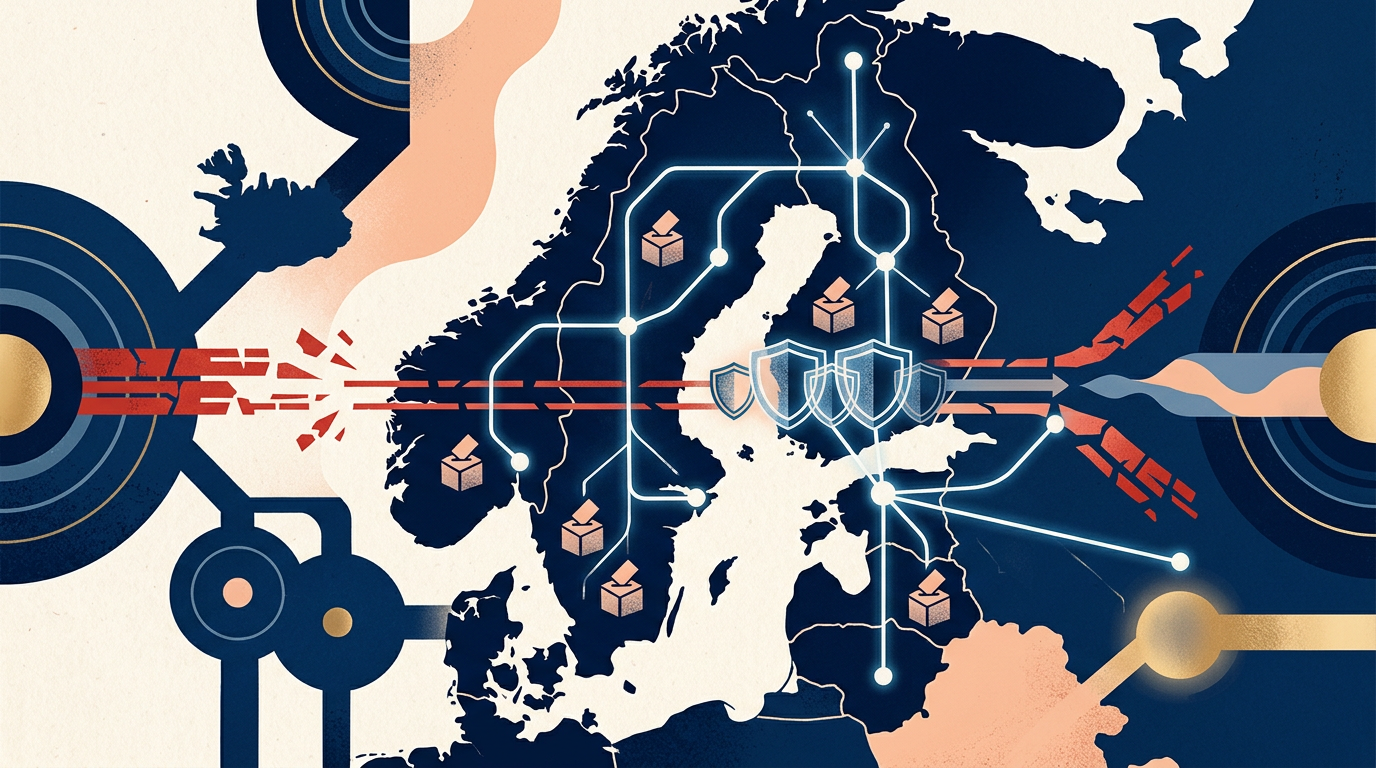
In NATO's cyber defence exercise Locked Shields 2024, which took place from 22-26 April, AI technology was integrated to strengthen the protection of voting systems. The exercise simulated large-scale cyberattacks against critical infrastructure in NATO member states. The purpose of integrating AI was to streamline the detection of anomalies and accelerate the response to threats against election systems.
Key facts
| Övningens namn | Locked Shields 2024 |
|---|---|
| Datum för övningen | 22-26 april |
| Fokustecknik | AI för valsystemskydd |
Why it matters
The use of AI in connection with cybersecurity and voting systems is relevant as it addresses challenges regarding disinformation and infiltration. By implementing AI solutions, organisations can improve their operational capacity to meet advanced cyber threats. This test serves as a benchmark for future defence strategies within cybersecurity.
Who is affected?
This development primarily affects national security agencies and electoral authorities within NATO countries. AI developers and cybersecurity companies collaborating with the public sector are also affected as the demand for AI-based security solutions may increase. Indirectly, citizens are affected through increased stability in democratic processes.
Impact on the EU
NATO's cyber exercise includes member states within the EU, such as Sweden, meaning all EU citizens whose countries participate are indirectly affected by the increased security around voting systems. The EU is also working on its own initiatives to strengthen cyber resilience within the union. The exercise strengthens the collective defence capabilities of NATO countries.
What else you should know
Sweden participated as a full member of NATO during the Locked Shields 2024 exercise. This marks Sweden's integration into NATO's collective cyber defence structures.
Quick answers about this story
Vad har hänt?
När hände det?
Varför spelar det roll?
Påverkar det EU?
Vilka bolag berörs?
The link opens in a new window and leads to the publisher's own site.
Källan är en aggregator eller syndikering — vi rekommenderar att verifiera hos primärutgivaren.
AI-verktyg i artikeln
Topics
Get similar news straight to your inbox
The reader's room
Send in a question or an addition. The newsroom reads everything before it's published and replies when relevant. No AI-generated text – just people.
Sign in to submit a comment or question.
Read the article through your role
- Decide whether this affects strategy over 6–12 months or is just noise.
- Discuss with leadership: do we own the right question or does ownership need to move?
- Ask: what risk are we taking by NOT acting on this this quarter?
Generated angle — not editorial analysis of "AI protects voting systems in NATO cyber exercise"